
Blog
Insights from PCF practice
Studies, analyses and experience from projects with industrial companies.Articles are currently available in German only.
Articles are currently available in German only.
Sustainable development is
“development that meets the needs of the present without compromising the ability of future generations to meet their own needs.”
–Brundtland Report: Our Common Future, 1987
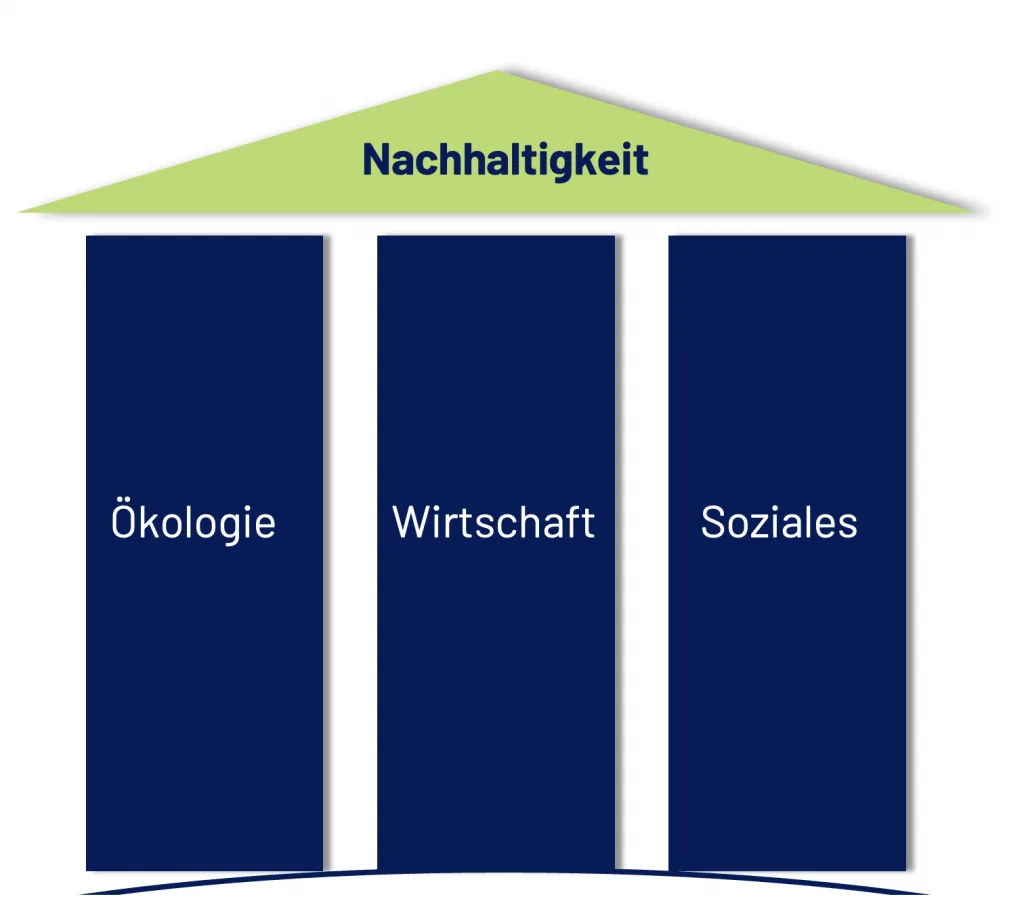
The three dimensions of sustainability
When talking about sustainability, it is important to treat the three dimensions of sustainability – economically efficient, socially just and environmentally sound – as equal. In this context, one can speak of a three-pillar model (see figure on the right).

Today, sustainability is an indispensable part of business strategy for companies of every size. For mid-sized companies, sustainability offers not only a way to demonstrate their environmental responsibility but also to increase operational efficiency and open up new market opportunities.
In this article, we explain why sustainability matters for mid-sized companies and how they can successfully integrate it into their business strategies.
Why sustainability matters
Sustainability is becoming increasingly important in the business world. This is due to a number of factors:
- Regulatory requirements: governments worldwide are tightening environmental laws and regulations. Companies must ensure they comply in order to avoid penalties and maintain their business operations.
- Customer demand: consumers and business customers increasingly prefer products and services from environmentally friendly companies. Sustainability can therefore be a decisive competitive advantage.
- Cost savings: sustainable practices can reduce companies’ operating costs. This includes everything from reducing energy consumption to minimising waste.
- Reputation and brand: a strong commitment to sustainability can improve the brand image and strengthen stakeholder trust.

Challenges and solutions

Financial barriers are one of the biggest hurdles, as implementing sustainable practices can require initial investment. Companies should look for funding programmes, grants and tax incentives offered specifically for sustainable initiatives.
In addition, partnerships with other companies or institutions can be formed to pool resources and share costs. Long-term planning and the gradual implementation of sustainable measures can also reduce the financial burden.
Another problem can be a lack of knowledge and any missing resources for implementing sustainable practices. External consultants and specialised service providers can provide valuable support here. Training and further education for employees can also help build the necessary knowledge internally. In addition, best practices and success stories from other companies can serve as guidance.
Changes within the company can meet resistance, especially if they challenge existing ways of working and routines. Clear and open communication of the benefits of sustainable practices is crucial. Companies should highlight the successes and positive effects of sustainable measures and actively involve employees in the change process to win their commitment and support. Regular meetings, workshops and feedback rounds can help address concerns and ease the change.
Steps for integrating sustainability
To integrate sustainability effectively, mid-sized companies should follow these steps:
Set sustainability goals
Companies should define clear and measurable sustainability goals. These can include reducing CO2 emissions, increasing energy efficiency or increasing the share of renewable energy.
Integrate sustainability into corporate strategy
Corporate Social Responsibility (CSR) refers to companies’ responsibility for their impact on society. This includes environmental, social and economic aspects. CSR is relevant because it enables companies to integrate sustainable practices into their business strategy and thus make a positive contribution to society. Through CSR, companies can gain the trust of their stakeholders, strengthen their reputation and remain competitive in the long term.
Based on Corporate Social Responsibility (CSR), sustainability should be an integral part of business strategy. This means that sustainable practices should be integrated into all aspects of the business, from procurement through production to delivery.
Involve employees
Involving employees is crucial to the success of the sustainability strategy. Companies should carry out training and awareness measures to promote employee awareness and engagement.
Promote stakeholder management
Effective stakeholder management is crucial. Companies should consider the interests and expectations of their stakeholders, including customers, employees, suppliers and the local community.
Produce sustainability reports
By producing and publishing sustainability reports, companies can present their progress transparently and strengthen stakeholder trust.
Telusio’s view
Sustainability is of central importance for mid-sized companies. By integrating sustainable practices, considering stakeholder interests and having a strong CSR strategy, companies can not only demonstrate their environmental responsibility but also increase operational efficiency, reduce costs and open up new market opportunities. A survey by McKinsey now also confirms the increased appreciation of ESG programmes by external investors.
Successful implementation requires clear goals, a well-thought-out strategy, employee involvement and transparent reporting. Mid-sized companies that master these challenges will benefit in the long term and strengthen their competitiveness.



Your customer is asking for a PCF?Let’s talk.
Discover the easiest way to audit-ready PCFs – AI-powered and expert-reviewed.
Book an initial call