
Blog
Insights from PCF practice
Studies, analyses and experience from projects with industrial companies.Articles are currently available in German only.
September 12, 2024 · 4 min read · Dr. Johannes Weibl
ISO 14067 – Verification of the Product Carbon Footprint (PCF)
Articles are currently available in German only.
The Product Carbon Footprint (PCF)
According to the ISO 14067 standard, the Product Carbon Footprint comprises
“the sum of greenhouse gas emissions and removals in a product system, expressed as CO2 equivalents and based on a life cycle assessment using the single impact category of climate change”.
Calculating a Product Carbon Footprint (PCF) can be complex and time-consuming, as the emissions of various greenhouse gases that can arise over the entire life cycle of a product must be taken into account.
This includes not only carbon dioxide (CO2) but also methane (CH4), nitrous oxide (N2O), sulphur hexafluoride (SF6), nitrogen trifluoride (NF3), hydrofluorocarbons (HFCs) and perfluorocarbons (PFCs).
These emissions are converted into CO2 equivalents (CO2e) using the global warming potential. The global warming potential indicates how much one tonne of a greenhouse gas contributes to climate change compared to one tonne of CO2.
Besides PAS 2050 and the Greenhouse Gas Protocol, one of the best-known standards for calculating a product-related CO2 footprint is ISO 14067.
ISO 14067 – the standard for calculating the Product Carbon Footprint

ISO 14067 is an international standard that sets out the principles, requirements and guidelines for quantifying and reporting the carbon footprint of products.
Developed and published by the International Organization for Standardization (ISO), it is part of the ISO 14000 family, which covers environmental management standards.
ISO 14067 was first published in 2013 and updated in 2018. It builds on many existing ISO standards and combines their requirements to adapt them to the product level. For example, ISO 14067 is based on life cycle assessment (ISO 14040, ISO 14044), the guidelines for environmental labels (ISO 14020 series) and product category rules (ISO 14025).
Why are standards necessary when calculating the Product Carbon Footprint?
Calculating emissions at product level can be challenging at first, as different system boundaries and thus different processes must be included. Different data sources and calculation methods must also be considered. Every decision must be documented and justified.
To create comparability between different values, guidelines for correctly calculating a Product Carbon Footprint are indispensable.
This ensures that all competitors in the market use the same calculation methodology and comparable system boundaries, so that no emissions are “fudged away”. This makes benchmarking and competitive analyses easier.
A Product Carbon Footprint value calculated according to a standard is therefore more credible and reliable than alternative values calculated without considering the requirements of a standard. Companies and consumers can trust that the results are consistent and traceable.
Third-party verification of compliance with the standard
To demonstrate the correct use of ISO 14067, verification by relevant certification bodies such as GUTcert is extremely important. This allows companies that carry out a Product Carbon Footprint calculation to prove their compliance and correctness – confirmation that the calculated carbon footprint is comparable and reliable.

More information on the relevance of verification can be found in the article on Telusio’s verification.
What requirements does the ISO 14067 standard place on calculating the Product Carbon Footprint?
ISO 14067 forms the basis for developing the Product Carbon Footprint and gives companies a solid foundation for determining, accounting for and verifying greenhouse gas emissions along the entire value chain of products and services. The standard is harmonised with the standards for life cycle assessment (ISO 14040 and ISO 14044).
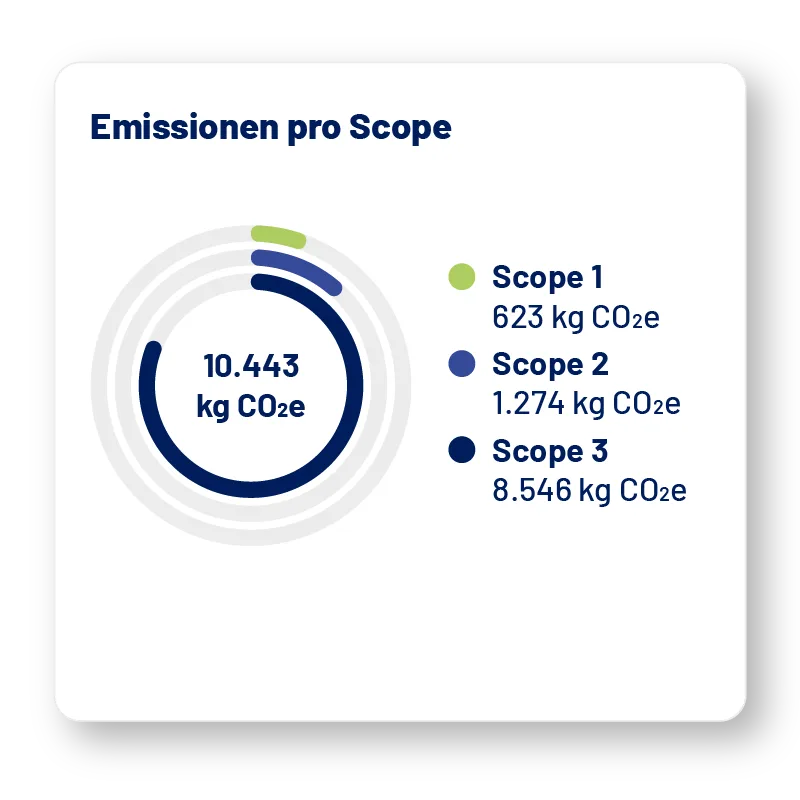
ISO 14067 contains specific requirements for quantifying the carbon footprint and reporting it. It sets out methodological steps for identifying and quantifying the greenhouse gas emissions generated within the different life cycle phases of products and services, from raw material extraction to disposal. It also provides a framework for interpreting the results.
Calculating the carbon footprint according to ISO 14067 can be applied to all kinds of products, regardless of their type or size. This includes both physical products and services.
How does ISO 14067 differ from other standards for product-specific emission calculation?
While PAS 2050 and the Greenhouse Gas Protocol focus exclusively on assessing greenhouse gas emissions, the ISO 14067 standard also contains guidelines for communicating the calculated Product Carbon Footprint results.
The completeness of reported emissions is also considered from different angles. While PAS 2050 requires that at least 95 percent of all process steps across all life cycles be included, the GHG Protocol does not set specific criteria but aims for 100 percent completeness. The ISO 14067 standard, by contrast, only specifies that insignificant material and energy flows may be excluded.
This goes hand in hand with differences in how the life cycle stages of a product are viewed.
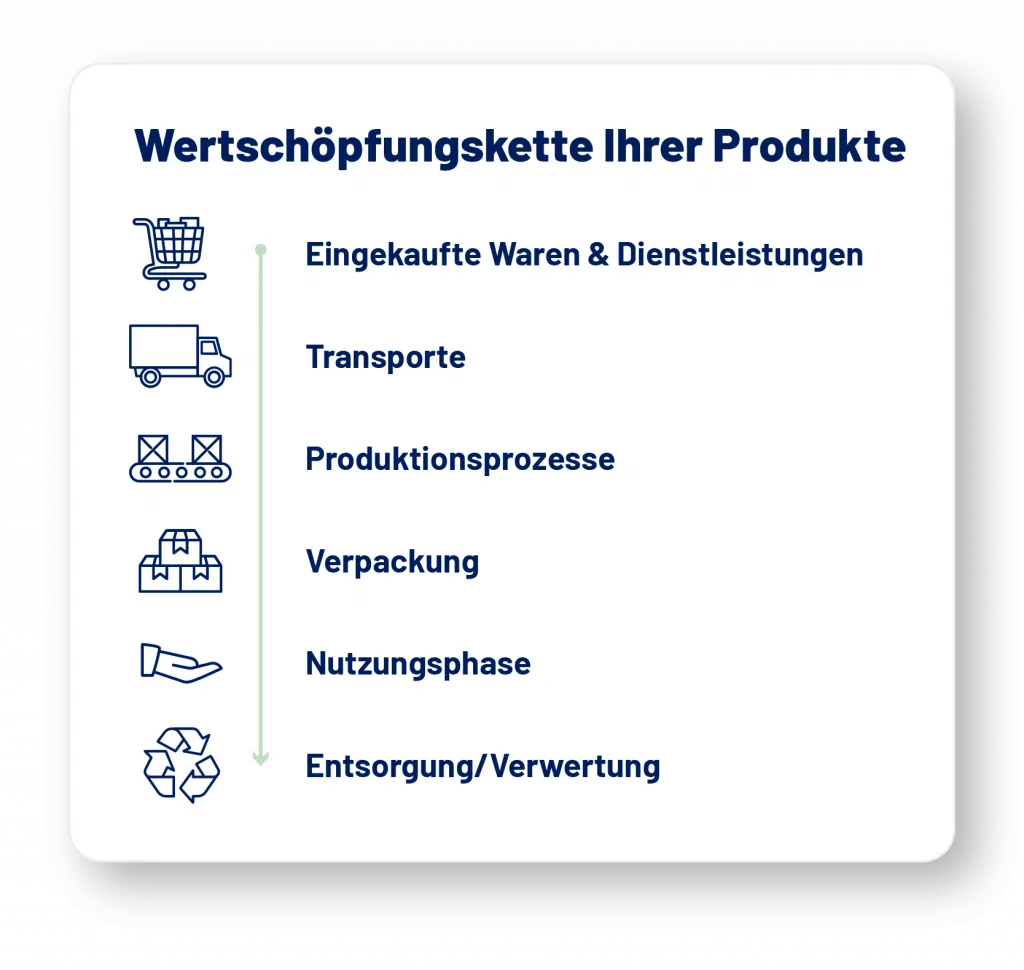
While PAS 2050 and the Greenhouse Gas Protocol focus on the complete emission value of a product generated over its entire life cycle, the ISO 14067 standard allows a more specific approach – focusing on certain life cycle stages within the value chain.
This is particularly helpful when system boundaries such as cradle-to-gate or cradle-to-customer are chosen.
Further information on the differences between the various guidelines for calculating the Product Carbon Footprint can be found in the following article by Lewandowski et al. (2021).
Telusio’s view
ISO 14067 is an essential instrument for companies that want to calculate their carbon footprint and achieve their sustainability goals. Companies that want to take a cradle-to-gate or cradle-to-customer perspective in particular should use this standard as a guideline.
To make sure that the Product Carbon Footprint value is comparable and robust, working with verified companies is helpful.
By complying with this standard and verifying PCF calculations, companies can not only improve their environmental performance but also gain the trust of their customers and stakeholders.




Your customer is asking for a PCF?Let’s talk.
Discover the easiest way to audit-ready PCFs – AI-powered and expert-reviewed.
Book an initial call