
Blog
Insights from PCF practice
Studies, analyses and experience from projects with industrial companies.Articles are currently available in German only.

Articles are currently available in German only.
In today’s business world, sustainability is becoming increasingly important. Especially for SMEs, integrating ESG criteria (environmental, social, governance) has become a decisive prerequisite for remaining competitive in the long term. But what is behind ESG and how can SMEs implement these criteria effectively? This article looks at the different levels of ESG, its relevance for SMEs and the legal framework and implementation options, in particular through the CSRD, GRI and CDP.
What does ESG stand for?
ESG stands for environmental, social and governance. These three dimensions form the basis for sustainable business:
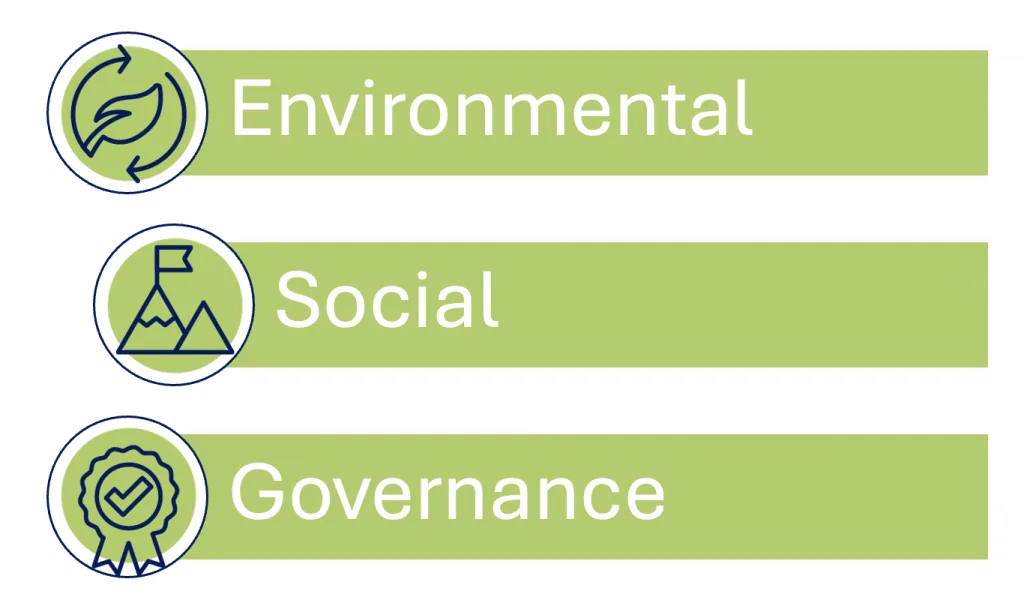
- Environmental: this concerns a company’s ecological footprint. Topics such as climate protection, resource efficiency and waste management are central aspects. Companies are encouraged to take measures to determine and reduce their CO2 emissions and promote renewable energy.
- Social: this area covers how a company treats its employees, suppliers, customers and society. Important topics are working conditions, diversity, health and safety, and social engagement.
- Governance: this dimension concerns a company’s internal structures and processes. Aspects such as business ethics, transparency, anti-corruption and responsible use of resources are important here.
Relevance of ESG for SMEs
For SMEs, integrating ESG criteria is not only a question of compliance but also a strategic necessity. Companies that integrate sustainability aspects into their business strategy benefit in various ways:
Competitive advantages: sustainable companies can stand out from their competitors and open up new customer segments that value sustainability.
Cost savings: more efficient use of resources and renewable energy can reduce costs in the long term.
Risk management: ESG-compliant companies are better equipped to manage risks related to environmental change and social expectations.
Employee retention: a sustainable corporate culture promotes employee satisfaction and helps attract and retain talented staff.
Legal framework and implementation options
However, not all ESG criteria have to be implemented by a company with the same urgency. So-called materiality assessments, which are integrated into the ESG framework, help here.
The term “materiality” indicates how relevant or significant a topic is for a company. To implement the selected ESG criteria effectively, companies must observe various legal requirements and standards. The most important include the Corporate Sustainability Reporting Directive (CSRD), the Global Reporting Initiative (GRI) and the Carbon Disclosure Project (CDP)
CSRD (Corporate Sustainability Reporting Directive)
The CSRD is an EU directive that obliges companies to report more comprehensively on their sustainability performance. The CSRD is part of the EU Green Deal and the most comprehensive regulation for enforcing ESG reporting in the EU.
Since 1 January 2024, the CSRD has been mandatory for large companies, and from 2026 for SMEs. The aim is to increase the transparency and comparability of ESG reporting. Companies must disclose detailed information on environmental, social and governance topics, including their strategy for climate neutrality and social responsibility.
Behind the CSRD are several specific laws and regulations of the European Union, such as the Non-Financial Reporting Directive (NFRD), which was extended and specified by the CSRD.
Double materiality assessment
A central concept of the CSRD is the “double materiality assessment”. It requires companies to assess both the financial impact of sustainability factors on the company and the company’s impact on the environment and society. This double materiality principle ensures that companies report comprehensively on their sustainability performance and consider both internal and external effects.
GRI (Global Reporting Initiative)

The GRI Standards are globally recognised guidelines for sustainability reporting. 70% of the global Fortune 500 companies use or refer to the GRI Standards. They help companies systematically capture and communicate relevant ESG data.
The GRI Standards cover various areas: general principles, indicators for economic topics, environmental performance indicators and social performance indicators:
CDP (Carbon Disclosure Project)

CDP is an organisation founded in the UK in 2000 to encourage companies to disclose their environmental data. The initiative was launched by a group of institutional investors and aims to collect comprehensive data on greenhouse gas emissions, water resources and forests. More than half of the value of the global capital market comes from companies that report via CDP.
Participation in CDP is via a questionnaire that companies complete and submit, stating the emissions generated. This data is then analysed and published by CDP to provide investors and other stakeholders with a sound basis for decisions. CDP publications serve to create transparency and increase pressure on companies to improve their environmental performance. Participation is voluntary.
Implementation in SMEs
For SMEs, implementing ESG criteria is a particular challenge. Due to limited resources and capacity, integrating sustainability strategies can be complex. Nevertheless, there are several approaches that can help SMEs:
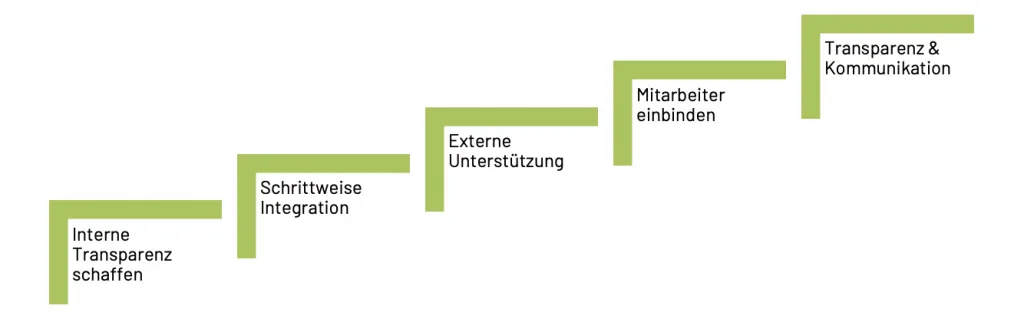
- Create internal transparency: the first step in implementing ESG criteria is always creating internal transparency, i.e. calculating and assessing the emissions generated. The Corporate Carbon Footprint or the Product Carbon Footprint can be used for this.
- Gradual integration: ESG criteria can be integrated into corporate strategy step by step. A first step could be recording and analysing current sustainability performance, followed by setting concrete goals and measures.
- External support: working with consultancies or using funding programmes can provide valuable support. External experts can help develop and implement sustainability strategies.
- Involve employees: involving employees in the sustainability process is crucial. Training and workshops can promote employee awareness and engagement.
- Transparency and communication: transparent communication of ESG performance strengthens the trust of customers, investors and other stakeholders. Regular reports and open dialogue are essential here.
Telusio’s view
Transparency is the basis of all ESG measures. Emissions must first be calculated and documented before targeted measures can be decided on.
The legal framework and standards such as the CSRD, GRI and CDP provide valuable guidance for implementation. To meet the legal requirements, you should first check whether the CSRD applies to your company. If so, you must follow the European sustainability reporting standards. If the CSRD does not apply to you, you have more leeway. Among the voluntary standards, the GRI framework is the most comprehensive.
However, if you already know your material topics and they are all covered by CDP, this framework may be more relevant for your company. Through gradual and targeted integration of ESG into corporate strategy, SMEs can make a significant contribution to sustainability while securing their future viability.




Your customer is asking for a PCF?Let’s talk.
Discover the easiest way to audit-ready PCFs – AI-powered and expert-reviewed.
Book an initial call