
Blog
Insights from PCF practice
Studies, analyses and experience from projects with industrial companies.Articles are currently available in German only.
January 27, 2025 · 3 min read · Dr. Johannes Weibl
LCA, PEF and PCF: Differences and Similarities
Articles are currently available in German only.
The terms life cycle assessment (LCA), Product Environmental Footprint (PEF) and Product Carbon Footprint (PCF) are at the heart of the quantitative assessment of the environmental impact of products and services. Accurate calculations and transparency are crucial for making sound decisions and improving the sustainability of processes and products. But how do these approaches differ, and how are they applied in practice?
How are LCA, PEF and PCF related?
Life cycle assessment (LCA) is the methodological basis for environmental assessment. It describes the scientifically standardised approach of analysing the environmental impact of a product or service across its entire life cycle.
LCA is governed by the international standards ISO 14040 and ISO 14044, which set clear rules for methodology and documentation. Thanks to its flexibility, LCA can be applied to a wide range of products and industries.
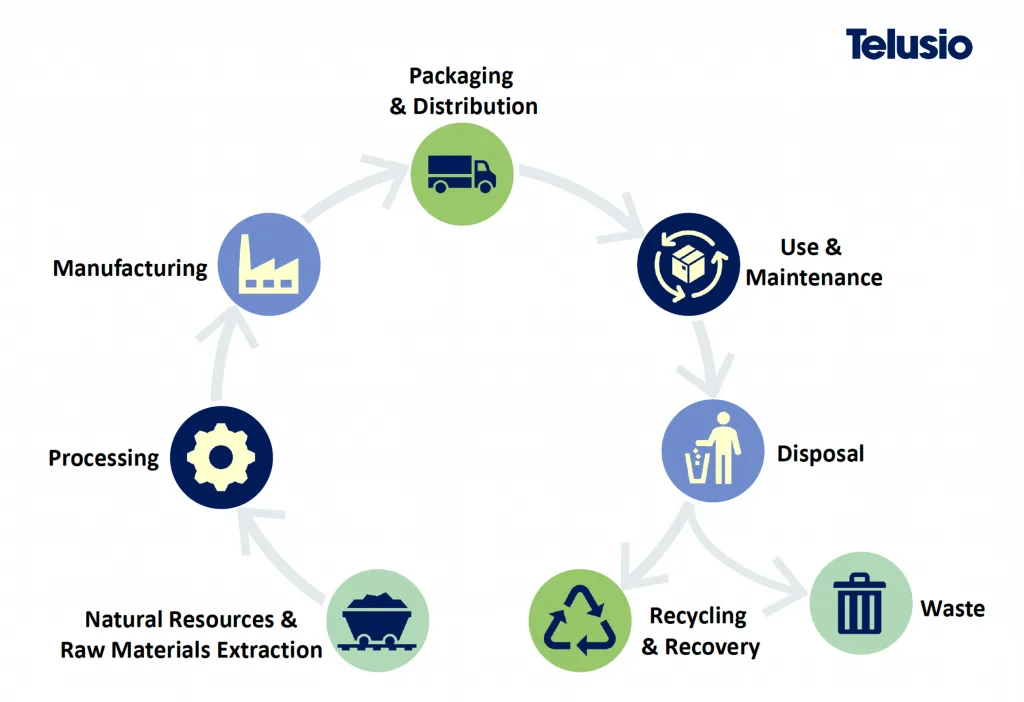
Figure 1: Diagram of life cycle assessment (LCA)
The Product Carbon Footprint (PCF) and the Product Environmental Footprint (PEF) are specialised applications of LCA. While the PEF assesses the environmental impact of a product in 16 different categories, including climate change, water use and land use, the PCF focuses on a product’s greenhouse gas emissions, measured in CO2 equivalents.
While LCA provides the general methodology, the PCF and PEF define specific frameworks that can be used for different goals and requirements. The PCF is ideal for developing climate protection strategies, while the PEF enables a more comprehensive sustainability assessment.
The Product Carbon Footprint (PCF) –
the established standard
The PCF is a specialised application of LCA that focuses on a product’s greenhouse gas emissions across its life cycle. Standards such as the GHG Protocol and ISO 14067 make the PCF an established tool that is used routinely in many industries.
In practice, companies use the PCF to quantify their emissions, meet regulatory requirements and create transparency towards stakeholders. With its clear focus on climate change, the PCF is particularly relevant at a time of growing political and public attention to climate protection.
The Product Environmental Footprint (PEF) –
a comprehensive approach in development
The PEF is a more comprehensive application of LCA that assesses 16 environmental categories, including climate change, water use, land use and resource use. The aim of the PEF is to create a harmonised and comparable method of environmental assessment based on scientific principles.
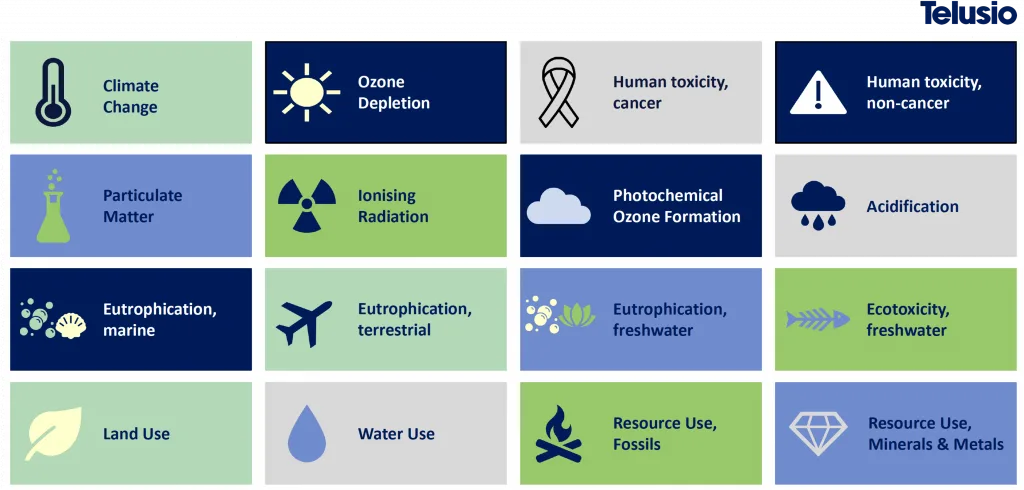
Figure 2: The 16 dimensions of the Product Environmental Footprint (PEF)
A central element of the PEF are the PEFCRs (Product Environmental Footprint Category Rules). These specific rules define how the PEF is to be calculated for individual product categories. As the PEF considers a large number of dimensions, the PEFCRs ensure that calculations are uniform and comparable. This is particularly important to ensure consistency between different products and industries.
Challenges in implementing the PEF
Implementing the PEF is still a challenge. Many dimensions of the PEF have not been clearly worked out, and their calculation is not yet clearly specified. Developing and updating the PEFCRs is an ongoing process that will be pushed forward over the next two to three years. Until 2024, the PEF was in a so-called “transition phase”, in which existing PEFCRs were revised and new methods developed. This phase served to improve data quality and integrate feedback from stakeholders such as companies, scientists and environmental organisations.
Companies face the challenge that many of the required data points are not yet documented or systematically recorded. Integrating the PEF into practice therefore requires considerable investment in data preparation, automation and adaptation to new standards. Nevertheless, the PCF as an established approach is proving to be an important pioneer for the PEF. Experience with PCF calculations creates the basis for efficiently meeting the more complex requirements of the PEF in future.
Telusio’s view
LCA, the PCF and the PEF are central tools for assessing the environmental impact of products and making more sustainable decisions. While the PCF is already an established standard that offers companies clear advantages, the PEF is a forward-looking approach that enables a more comprehensive assessment.
Companies that invest in data preparation and automation today are laying the foundation for meeting the PEF requirements efficiently in future. The combination of scientific methodology, regulatory development and technological innovation makes LCA, the PCF and the PEF indispensable instruments for a sustainable economy.

Your customer is asking for a PCF?Let’s talk.
Discover the easiest way to audit-ready PCFs – AI-powered and expert-reviewed.
Book an initial call