
Blog
Insights from PCF practice
Studies, analyses and experience from projects with industrial companies.Articles are currently available in German only.
February 3, 2025 · 4 min read · Dr. Johannes Weibl
From the Product Carbon Footprint (PCF) to the Product Environmental Footprint (PEF)
Articles are currently available in German only.
How the Product Carbon Footprint and the Product Environmental Footprint complement each other
At a time when sustainability is becoming ever more important for companies, methods for assessing the environmental impact of products are taking centre stage. The Product Carbon Footprint (PCF) and the Product Environmental Footprint (PEF) are two approaches that are often considered together, as they offer different but complementary perspectives.
This article looks at how PCF and PEF are related, how they differ and why both approaches are strategically important for companies.
What is the Product Carbon Footprint (PCF)?
The PCF is an established method for determining the climate-relevant emissions (greenhouse gas emissions) of a product across its entire life cycle.
It measures the greenhouse gas emissions generated during raw material extraction, production, use and disposal of a product and expresses them in CO2 equivalents. Because it measures greenhouse gas emissions, its focus is on the impact on climate change.
The PCF is particularly useful for identifying hotspots in the supply chain and taking targeted emission reduction measures. Companies that calculate their PCF benefit from a clear data basis that helps them meet regulatory requirements and optimise their climate strategies.
Greenhouse gas emissions, as captured by the PCF, are currently the most widely used method for assessing the environmental impact of products. This is because climate change is a central topic in both politics and public discourse. Standards such as the GHG Protocol or ISO 14067 provide clear rules for the calculation and make the PCF an indispensable tool for companies.
What is the Product Environmental Footprint (PEF)?
The Product Environmental Footprint (PEF) is a method for measuring and assessing the environmental impact of a product across its entire life cycle, covering 16 different dimensions (including climate-relevant emissions/greenhouse gases), from raw material extraction to disposal.
The PEF was developed by the European Commission to comprehensively assess the environmental impact of a product. Unlike the PCF, the PEF considers 16 environmental categories, shown in the following figure. One of them is “climate change”, which, as with the PCF, measures the greenhouse gas emissions caused by manufacturing a product. But many others are added, such as water use (measured in cubic metres of water) or resource use (e.g. fossils, measured in kg of oil equivalent).
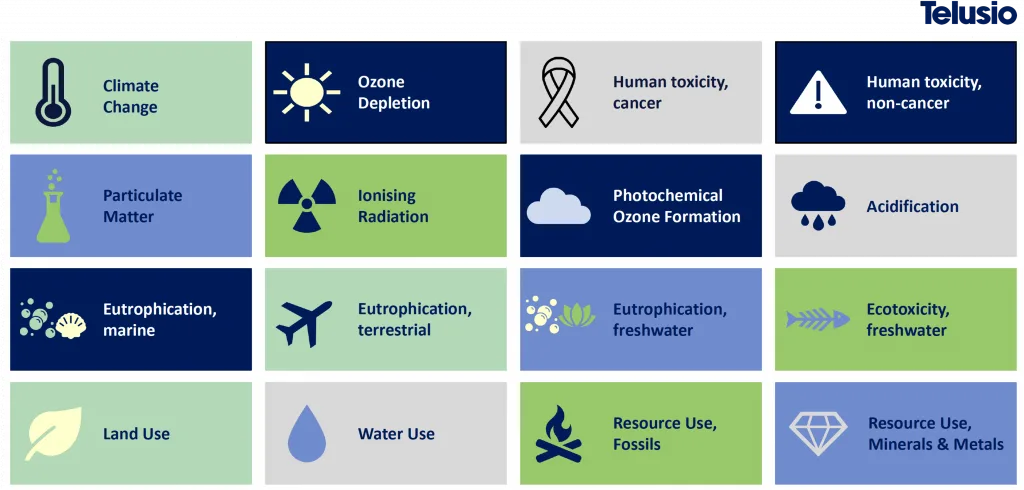
Figure 1: The 16 dimensions of the Product Environmental Footprint (PEF)
The PEF offers a multidimensional view of a product’s environmental impact and makes it possible to assess not only climate-relevant emissions but also other important environmental factors.
This broader perspective makes the PEF particularly suitable for assessing the sustainability of products holistically. Nevertheless, implementing the PEF is currently difficult, as many of the required data points are not yet systematically documented in companies. As a result, the focus is often on dimensions such as GHG emissions, which are already covered effectively by the PCF and can pave the way for a later PEF calculation.
Life cycle assessment (LCA) as the basis
Both the PCF and the PEF are based on life cycle assessment (LCA), a methodological foundation that systematically assesses the environmental impact of a product across its entire life cycle.
LCA considers all phases of the product life cycle – from raw material extraction through production and use to disposal. It provides the data needed to quantify specific environmental categories such as climate change, water use or resource use. The following figure shows an illustrative example of LCA and its comprehensive approach:
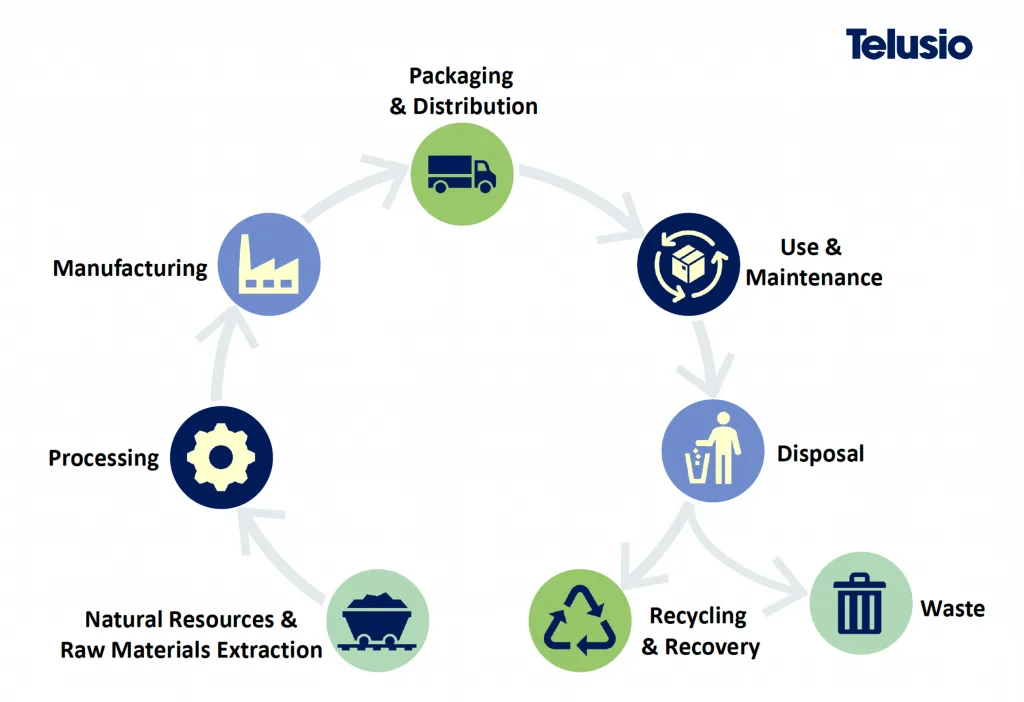
Figure 2: Diagram of life cycle assessment (LCA)
PCF and PEF: similarities and differences
Although the PCF and the PEF have different focuses, both are based on life cycle assessment (LCA). The main difference, however, lies in the scope of the assessment:
PCF: focuses on greenhouse gas emissions
PEF: considers further environmental categories in addition to greenhouse gas emissions.
However, the two approaches do not compete but complement each other.
The PCF can serve as a first step to identify climate hotspots, while the PEF enables a deeper analysis of the overall environmental impact.
The PCF is already governed by established standards and is used routinely in many industries. The PEF, on the other hand, is still in a transition phase. The European Commission is working on standardising and spreading the PEF in order to improve the comparability of environmental assessments. New recommendations and guidelines are expected to come into force from 2025, which could make the PEF a central instrument for companies.
Automation from PCF calculation paves the way for the PEF
PCF calculation is already well advanced thanks to modern technologies such as automation and AI. Automated systems can process large volumes of data and use secondary data from scientific databases to deliver precise results.
These advances in data preparation and modelling are paving the way for implementing the PEF. The experience and technologies companies are developing for the PCF today create the basis for efficiently mastering the more complex requirements of the PEF in future.
Telusio’s view
The PCF is a current and strategic tool that helps companies measure their greenhouse gas emissions and implement targeted emission reduction measures. The PEF, on the other hand, is a forward-looking approach that enables a more comprehensive assessment of environmental impacts. Due to current challenges with data availability and still unclear legal requirements, however, the PEF remains a topic companies should prepare for. The further development of automation and data preparation in the context of the PCF is paving the way for the PEF, so that companies can benefit from both approaches in the long term.

Your customer is asking for a PCF?Let’s talk.
Discover the easiest way to audit-ready PCFs – AI-powered and expert-reviewed.
Book an initial call