
Blog
Insights from PCF practice
Studies, analyses and experience from projects with industrial companies.Articles are currently available in German only.
September 21, 2025 · 7 min read · Dr. Johannes Weibl
EU Ecodesign Regulation: What Companies Need to Consider Now
Articles are currently available in German only.
The Ecodesign for Sustainable Products Regulation (ESPR) (Regulation (EU) 2024/1781) has been in force since 18 July 2024 and applies directly in all EU member states. For companies, this means: sustainability will no longer be an “add-on”, but a binding part of product development, the supply chain and market presence.
What to expect in this article:
The new EU Ecodesign Regulation (ESPR) affects almost all industries – perhaps your company too. We show which products and obligations are now becoming important, where the opportunities and risks lie and how you can adapt your processes early. That way, you are not only compliant but also secure advantages in a market that is becoming ever more sustainable.
1. What is the Ecodesign Regulation?
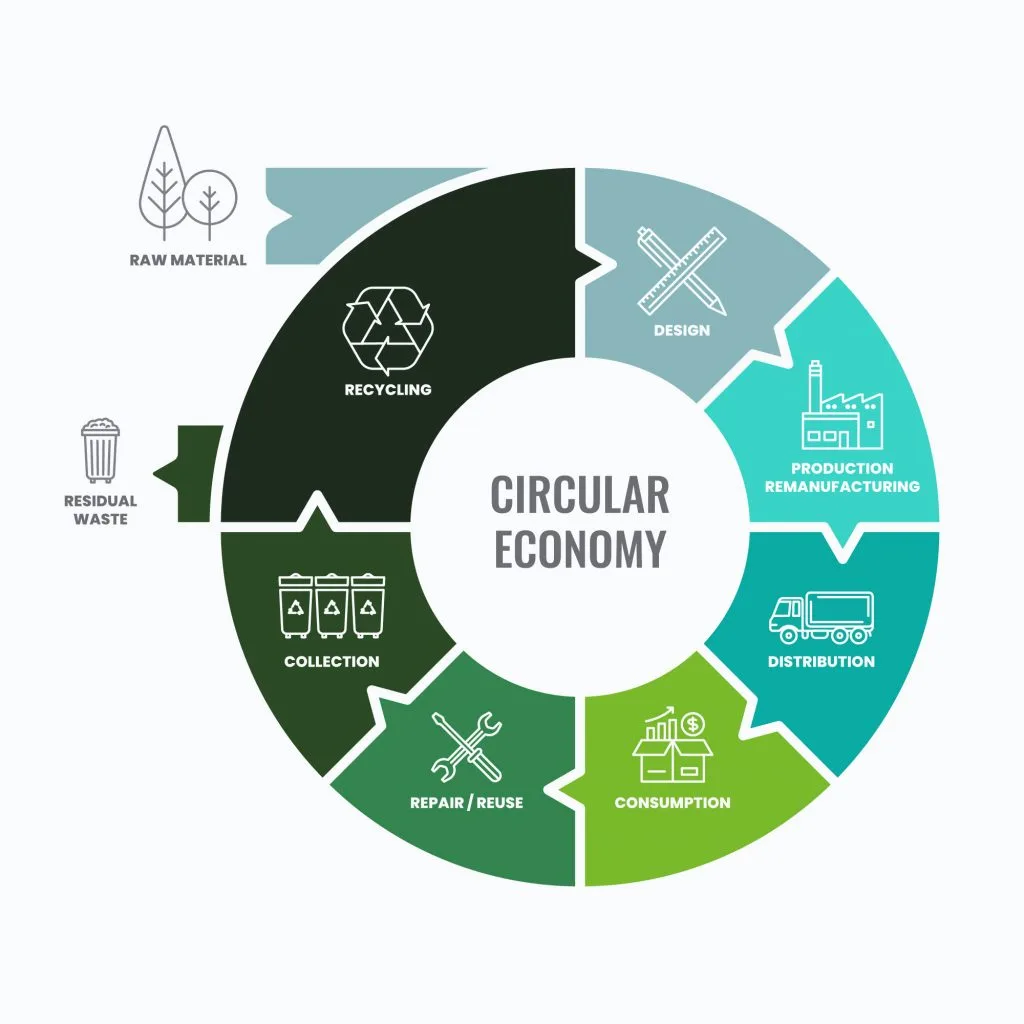
The Ecodesign for Sustainable Products Regulation (ESPR) is the EU’s central instrument for making products more sustainable across their entire life cycle. It sets binding requirements for durability, reusability, reparability, recyclability and the use of recycled materials. It also introduces the digital product passport, which creates transparency about materials and environmental impacts. The aim is to make resource-efficient products the standard in the EU, strengthening the circular economy, competitiveness and climate protection.
The ESPR replaces the previous Ecodesign Directive 2009/125/EC, which only covered energy-related products. It significantly broadens the approach: in future, a uniform framework applies to almost all physical products on the EU single market. It is based on the European Green Deal and the Circular Economy Action Plan of 11 March 2020.
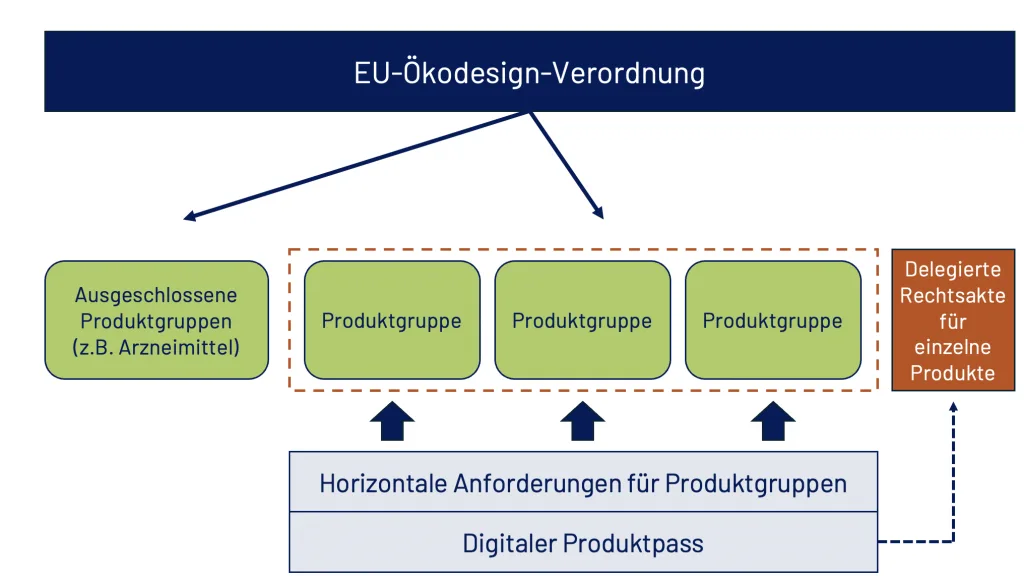
The regulation creates a legal framework within which the EU Commission can adopt specific implementing measures and delegated acts for individual product groups. Initially, the focus is on prioritised sectors such as textiles, furniture and electronics. These are complemented by horizontal requirements, for example on material efficiency, recyclability and digital transparency.

With the ESPR, sustainability requirements are systematically anchored in the single market. Step by step, it introduces binding rules on durability, reparability, resource use and transparency, making sustainable products the new norm in Europe.
2. What is the current status?
Based on the latest publication by the EU Commission, “Adoption and publication of the first ESPR and Energy Labelling Working Plan”, here are the 9 most important points companies now need to know and consider.
 Working plan 2025–2030
Companies must be prepared for the current working plan to cover a five-year period (2025–2030), with a review in 2028. The aim is to balance environmental impact, innovation and practicability – with particular attention to proportionality for SMEs.
Prioritised product groups
Particularly affected are sectors such as textiles and apparel, aluminium, steel, furniture and lubricants. But many energy-related products such as household appliances, mobile phones or refrigerators are also in focus. Binding ecodesign and energy labelling rules will apply to these in the near future. All other product groups are expected to come into the focus of the Ecodesign Regulation only after 2030.
Digital Product Passport (DPP)
A digital product passport (introduced gradually from 2027) will become mandatory for almost all affected products. It must contain information on materials, substances contained, safe use, and recycling and disposal routes.

Horizontal requirements
Regardless of the specific product, manufacturers will increasingly have to consider criteria such as reparability, recyclability, durability and minimum recycled content. Information obligations along the supply chain will also become more important.
Market surveillance and enforcement
Controls in the member states are to be massively stepped up, especially in online retail. For companies, this means a higher risk in case of non-compliance, combined with potential sanctions and increasing audit effort.
Labelling and transparency
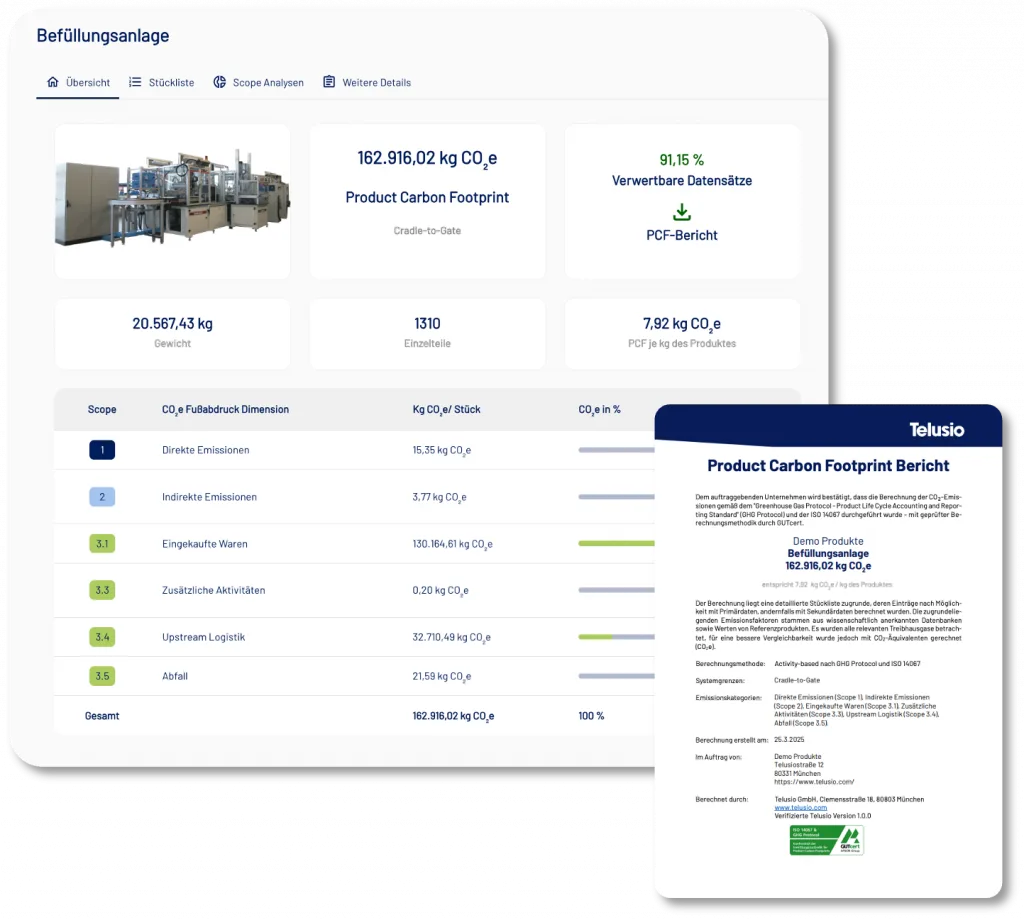
In addition to existing energy labels, the EU is examining additional sustainability labels. Companies must prepare to provide information on carbon footprint, water consumption or reparability in future. Uniform durability information could become mandatory, increasing comparability.
Import requirements
Importers and distributors of products from outside the EU must also meet all ecodesign requirements. Companies with global supply chains should therefore adapt their sourcing and production strategies early.
Public procurement
Binding ecodesign criteria are being examined for public procurement.
Product groups not yet included
Some segments – such as feed, medicines or food – are not part of the working plan for now, but could be regulated in future.
3. Relevance for companies
Digital product passport
From 2027 (gradual introduction), products without a digital product passport may no longer be placed on the EU single market. The DPP contains product-specific information on materials, reparability, sustainability and the supply chain and is usually made accessible via a QR code directly on the product (information requirements). Exactly which data is mandatory is defined by the EU Commission in delegated acts.
For companies, this means: they must align their IT and data infrastructure in good time so that all relevant information along the supply chain can be captured and provided. From 2026, a central EU registry will also be introduced through which product passports can be accessed – customs procedures will also draw on it in future. Those who do not prepare risk considerable extra work, rising compliance costs and, in the worst case, losing market access.
Extended scope
In future, almost all physical products will fall under the ESPR – including components and intermediate products – with greater weight given to the entire life cycle from manufacturing to recycling. Exceptions apply only to a few areas such as food or defence goods. Companies in almost all industries, from textile manufacturers to machine builders, are therefore required to prepare for the new rules in good time.
New design obligations – ecodesign
The ESPR introduces binding horizontal requirements that apply across industries to almost all product groups. In future, products must be significantly more durable, easier to repair and more recyclable. The use of recycled materials is also moving into focus: minimum shares of recycled content could become mandatory. At the same time, business models based on planned obsolescence and fast replacement cycles are losing appeal, as they are increasingly restricted by regulation.
In addition, the regulation for the first time contains provisions on handling unsold consumer products: from July 2026, a ban on destroying certain product groups such as clothing, clothing accessories and footwear applies to large companies, which will be extended to medium-sized companies from 2030. Small and micro enterprises are not affected. For companies, this means: product development must be rethought as ecodesign and closely linked to circular economy strategies.
4. Opportunities and competitive advantages
The transition to ecodesign requires a systematic approach and clearly defined responsibilities within the company in order to secure opportunities and competitive advantages:
 Early-mover positioning: Those who meet the requirements proactively can position themselves as sustainable pioneers.
Market access: Sustainability requirements will become decisive for access to the EU single market.
Innovation driver: Ecodesign opens up new business models (e.g. rental models, second-life concepts).
Financing and investor advantages: ESG-compliant business is increasingly a prerequisite for access to capital.
5. Risks and challenges
The new ESPR requirements are demanding and bring various operational and strategic challenges:
 Rising costs: changes in product development, materials, supply chain and documentation.
Risk of sanctions: violations can lead to market exclusion, fines or product recalls.
Supply chain complexity: companies depend on data from their suppliers – compliance therefore relies heavily on partners.
Market pressure: those who react too late risk competitive disadvantages, as sustainable products are becoming the norm for customers too
Managing these challenges proactively is crucial to avoid sanctions and remain successful in the market in the long term.
6. Current timeline
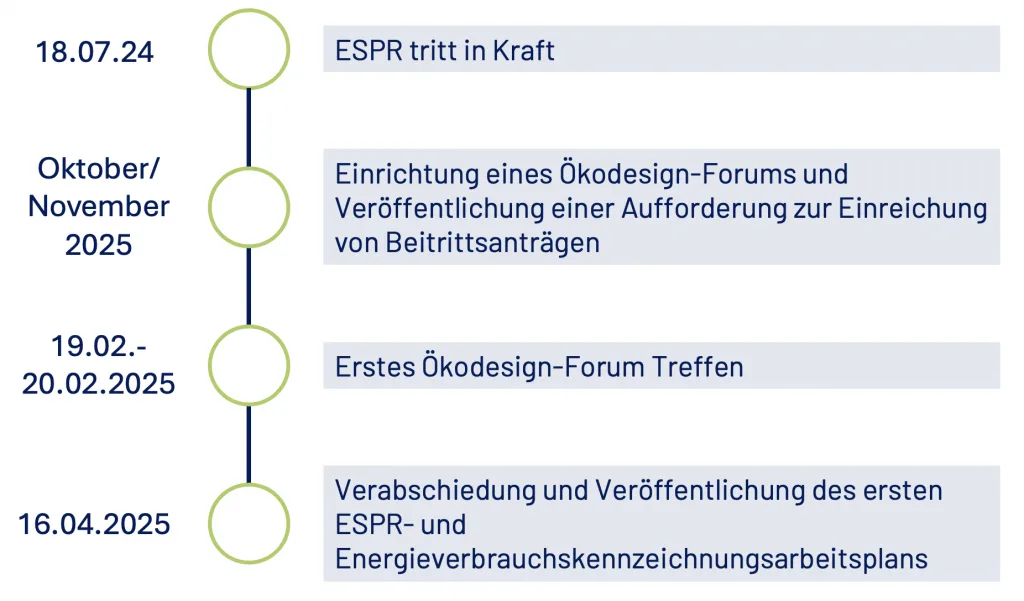
To stay up to date, use the European Commission’s portal: click here.
7. Roadmap for implementing the ESPR
- Start with a stocktake
- Which products fall under the ESPR?
- Which data is missing (materials, recyclability, carbon footprint)?
- Build supply chain management
- Close exchange with suppliers on data provision.
- Anchor sustainability criteria in purchasing processes.
- Rethink product development
- Focus on durability, reparability, circularity.
- Involve design departments early.
- Develop an IT and data strategy
- Systems for capturing and providing sustainability data (DPP).
- Implement digital tools for transparency and traceability.
- Communication and market strategy
- Actively market sustainable products.
- Address consumers and business customers with clear, EU-compliant sustainability claims.
Telusio’s view: ESPR – a fundamental change for the European single market
The ESPR fundamentally changes the European single market. For companies, it is both a challenge and an opportunity: compliance is mandatory, sustainability becomes a competitive advantage. Those who invest now secure not only regulatory certainty but also market share in an increasingly sustainability-driven economy.

Your customer is asking for a PCF?Let’s talk.
Discover the easiest way to audit-ready PCFs – AI-powered and expert-reviewed.
Book an initial call