
Blog
Insights from PCF practice
Studies, analyses and experience from projects with industrial companies.Articles are currently available in German only.
January 16, 2025 · 1 min read · Dr. Johannes Weibl
Battery Passport: New Standard DIN DKE SPEC 99100
Articles are currently available in German only.
The introduction of the digital battery passport is getting closer: from February 2027, it will be mandatory throughout the EU and is intended to create transparency across the entire life cycle of batteries.
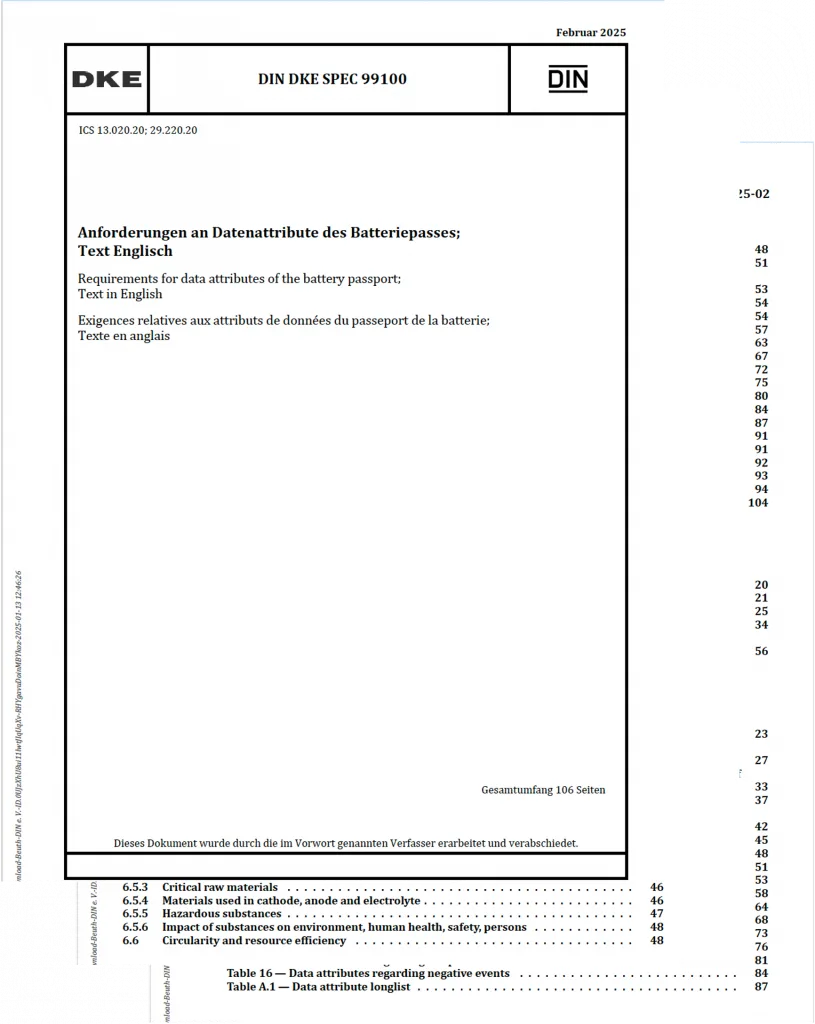
With the publication of the new standard DIN DKE SPEC 99100 by the German Institute for Standardization (DIN) and the German Commission for Electrical, Electronic & Information Technologies (DKE), a decisive step has now been taken towards putting the requirements of the EU Battery Regulation into practice.
The standard defines in detail which data attributes the battery passport should contain. These include mandatory and voluntary information on topics such as:
- General battery and manufacturer information
- Material composition
- Performance and durability
- Working conditions in raw material extraction
- Carbon footprint
Why is the battery passport so important?
Batteries play a key role on the path to climate neutrality – whether in electric vehicles, e-bikes or industrial energy storage. But to compare their sustainability and performance, standardised documentation is indispensable.
The digital battery passport provides exactly this transparency and at the same time promotes circular value creation by providing comprehensive information on origin, use and recycling options.
DIN DKE SPEC 99100 gives companies clear guidance on which data they need to capture and provide to implement the battery passport. This not only makes it easier to comply with legal requirements but also creates the basis for further international standards.
The standard is available free of charge here on the website of the German Institute for Standardization (DIN).




Your customer is asking for a PCF?Let’s talk.
Discover the easiest way to audit-ready PCFs – AI-powered and expert-reviewed.
Book an initial call