
Blog
Insights from PCF practice
Studies, analyses and experience from projects with industrial companies.Articles are currently available in German only.
November 28, 2024 · 4 min read · Dr. Johannes Weibl
Standardisation Organisations Compared: ISO, DIN and EN
Articles are currently available in German only.
An article from our series
Standards for a sustainable future: standards for sustainability and innovation
Standardisation is a central tool for ensuring the quality, safety and compatibility of products offered on a global and European market. These standards promote the free movement of goods, facilitate international trade and contribute to technological progress.
Different standardisation organisations, such as the international ISO, the European CEN and the German DIN, work at different levels to develop technical standards and ensure uniformity.
This article looks at the differences between international, European and national standardisation organisations, their areas of responsibility and their importance for harmonising technical standards.
What distinguishes standardisation organisations such as ISO, DIN and EN?
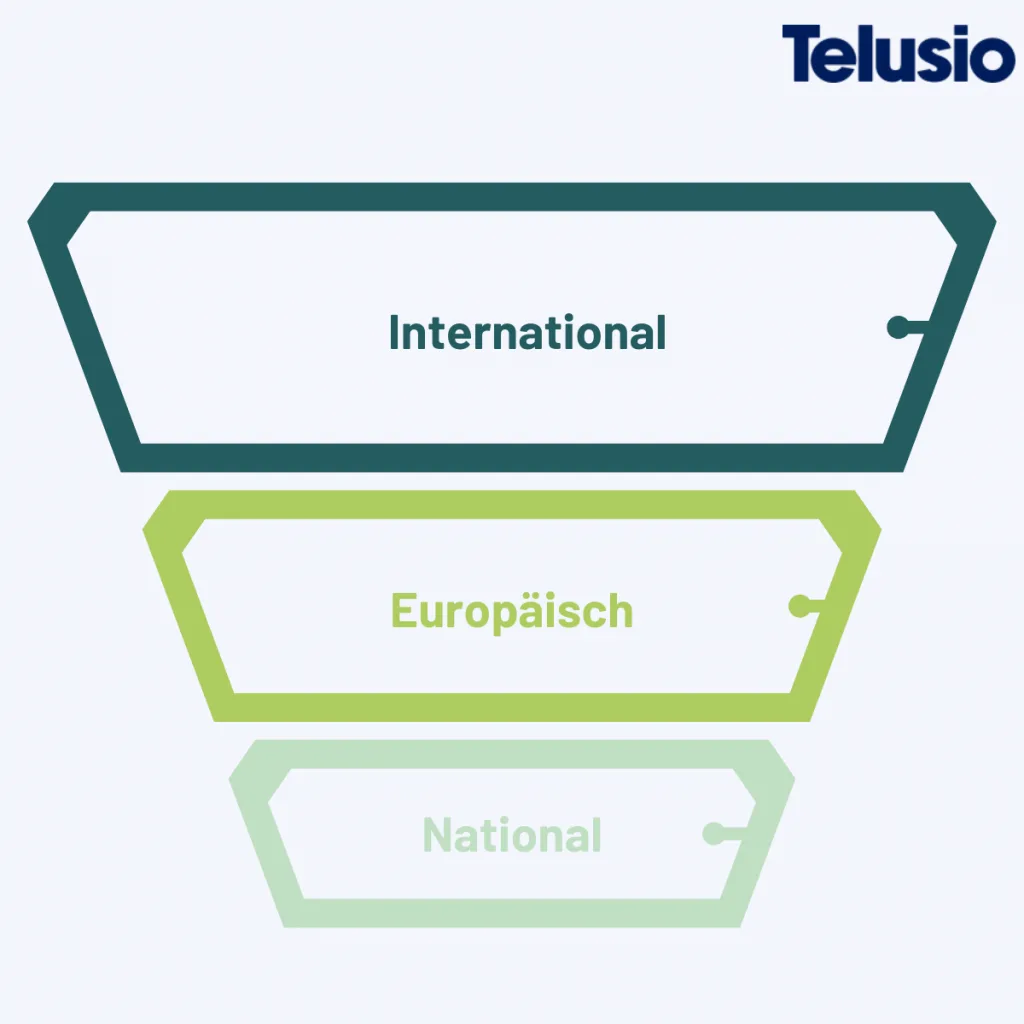
Standardisation organisations differ in their geographical scope, their specific fields and their way of working.
Standardisation takes place at three main levels: international, European and national.
At each of these levels, there are specialised organisations responsible for certain areas or sectors. Within a field, international, European and national organisations work closely together to ensure international harmonisation of standards and to promote global trade and technological development. In principle, uniformity of standards plays an overriding role, which is why European standardisation organisations try to adopt existing international standards, while national organisations within the EU are entrusted with transferring standards directly from European to national level.
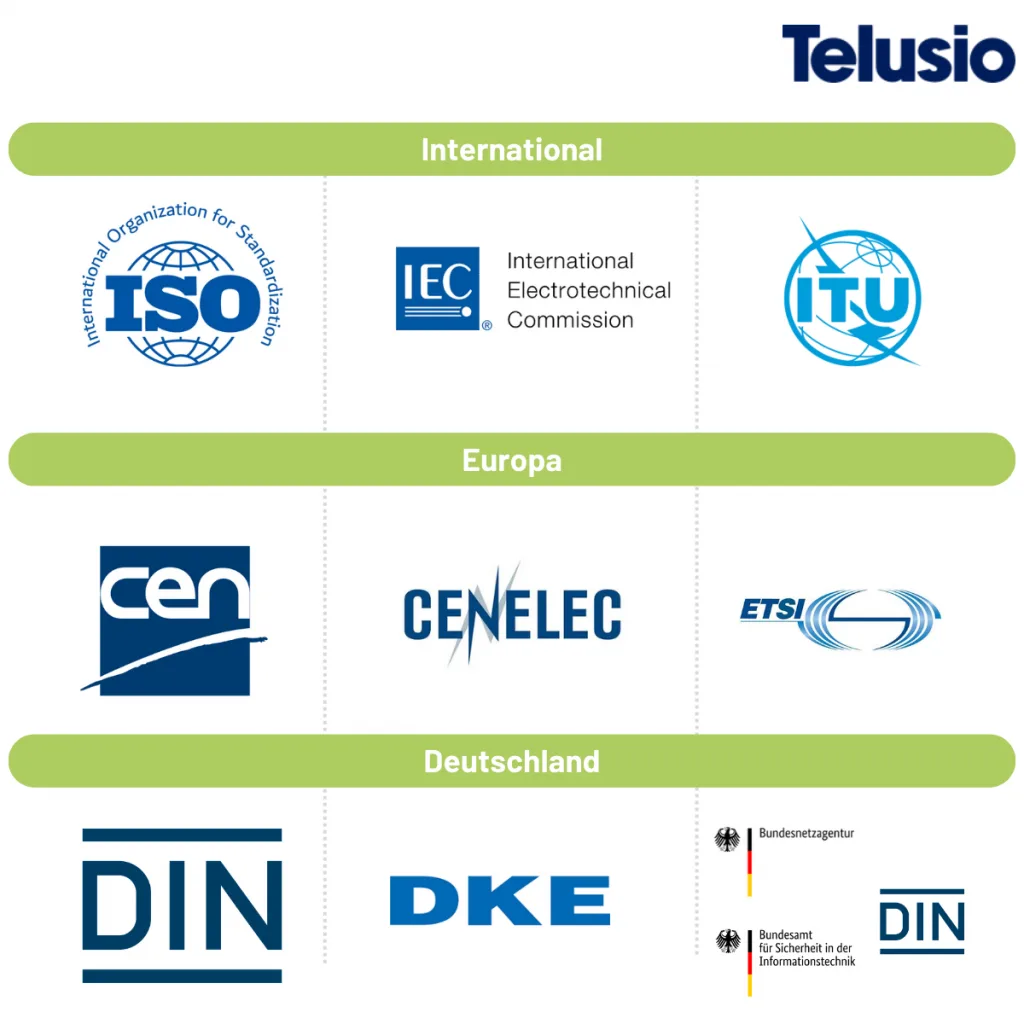
Overview of the most important standardisation organisations by field and main level.
International level: ISO, IEC and ITU
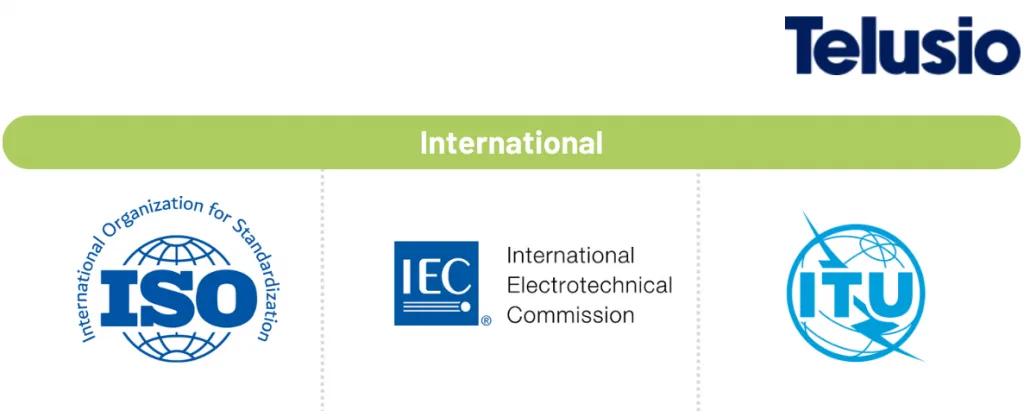
The International Organization for Standardization (ISO) is the central organisation for international standardisation. It was founded in 1947 and covers a broad range of areas, with the exception of electrical engineering and telecommunications.
In addition to ISO, there is the International Electrotechnical Commission (IEC), which is specifically responsible for standardisation in electrical engineering and electronics.
There is also the International Telecommunication Union (ITU), which is responsible for standardisation in telecommunications. It focuses exclusively on global communication technology and infrastructure.
European level: CEN, CENELEC and their relationship with ISO and IEC
EN (European Norms) are standards developed specifically for the European single market by European standardisation organisations. After adoption by the European Council, EN standards must be adopted as national standards by all EU member states, ensuring the harmonisation of technical rules and laws within the single market.
At European level, the most important organisations are CEN (European Committee for Standardization), CENELEC (European Committee for Electrotechnical Standardization) and ETSI (European Telecommunications Standards Institute).
CEN is responsible for standardisation in a wide range of areas and often adopts ISO standards in order to adapt them to European needs and circumstances and ensure close cooperation and harmonisation between international and European standards. These adapted standards are referred to as EN ISO.
CENELEC focuses on standardisation in electrical engineering and electronics. It works intensively with the IEC and accordingly adopts many of the international IEC standards.
ETSI is responsible for developing and standardising standards in telecommunications and works very closely with the ITU, which carries out global standardisation in telecommunications.
National level: DIN, DKE etc.
At German level, it is above all DIN that is responsible for implementing European standards. In addition, there is the DKE and German ministries that take care of national implementation.
DIN (German Institute for Standardization) is the central German standardisation organisation and plays two different roles. On the one hand, as the German Institute for Standardization, it develops national standards independently; however, DIN standards now only apply in areas where there are no ISO or EN standards. As part of international harmonisation, more and more DIN standards are being replaced by ISO or EN standards.
Accordingly, DIN is increasingly playing a role at European level too. As a member of the international standardisation organisation ISO and of CEN, DIN ensures that German interests are represented in international and European standardisation processes. In cooperation with ISO, it is responsible for integrating international standards into the German standardisation process.
DKE (German Commission for Electrical, Electronic & Information Technologies) is the German standardisation organisation for electrical engineering and information technology. It works as a joint body of DIN and VDE (Association for Electrical, Electronic & Information Technologies). At European level, the DKE is also closely linked to CENELEC, the European Committee for Electrotechnical Standardization. Here, the DKE ensures that German positions are transferred into European standards, which in turn form the basis for harmonising standards throughout the EU single market.
In Germany, the Federal Network Agency (BNetzA) also works closely with ETSI. The BNetzA is the competent national authority responsible, among other things, for regulating telecommunications. In addition to the BNetzA, DIN and the Federal Office for Information Security (BSI) also work with ETSI in certain areas, especially when it comes to the standardisation and security of IT systems, such as cybersecurity standards.
Telusio’s view
Close cooperation and coordination between international, European and national standardisation organisations such as ISO, CEN, ETSI and DIN is of crucial importance. Common standards not only facilitate global trade but also drive technological progress by ensuring quality, safety and interoperability. Especially in a globalised world, it is essential that national interests are in harmony with international requirements. Only through this international coordination can solutions be created that are tailored to the regional market and also used worldwide.



Your customer is asking for a PCF?Let’s talk.
Discover the easiest way to audit-ready PCFs – AI-powered and expert-reviewed.
Book an initial call